I have been thinking lately about how good we have become at filling every available minute of the day. There is almost no such thing as an empty ten minutes anymore. If I finish something earlier than expected, I answer an email. If I am waiting for coffee, I check my phone. If I sit down for a few minutes, somehow Instagram appears in my hand before I have even consciously decided that I wanted to look at it. We have become so accustomed to constant occupation that doing absolutely nothing for a little while can almost feel irresponsible.
I am certainly not against being busy. I like working, I like having projects, and I actually enjoy the feeling of a productive day. I don’t have any desire to abandon ambition in pursuit of some perfectly slow existence where nothing ever happens. But I have started wondering whether, in becoming so efficient at using our time, we have also become very bad at simply enjoying it. There is a difference between having a full life and feeling that every minute of that life needs to produce something.
Perhaps that is why I have become increasingly fascinated by the small rituals that used to divide the day. Afternoon tea, coffee after lunch, reading the newspaper, sitting outside for a little while, writing a letter, or having something sweet before returning to whatever needed to be done. None of these things were particularly important, and maybe that was precisely their value. They created punctuation. The day wasn’t one continuous sentence running from the moment you woke up until you finally went to bed.
For me, the hour I keep coming back to is somewhere around four in the afternoon. By then, the urgency of the morning has usually passed, but the evening hasn’t quite begun. Dinner can wait. There may still be work left to do, but most days there is nothing so catastrophic that it cannot survive without me for twenty minutes. It is a strange little in-between hour, and I have decided that I would like to reclaim some of it.
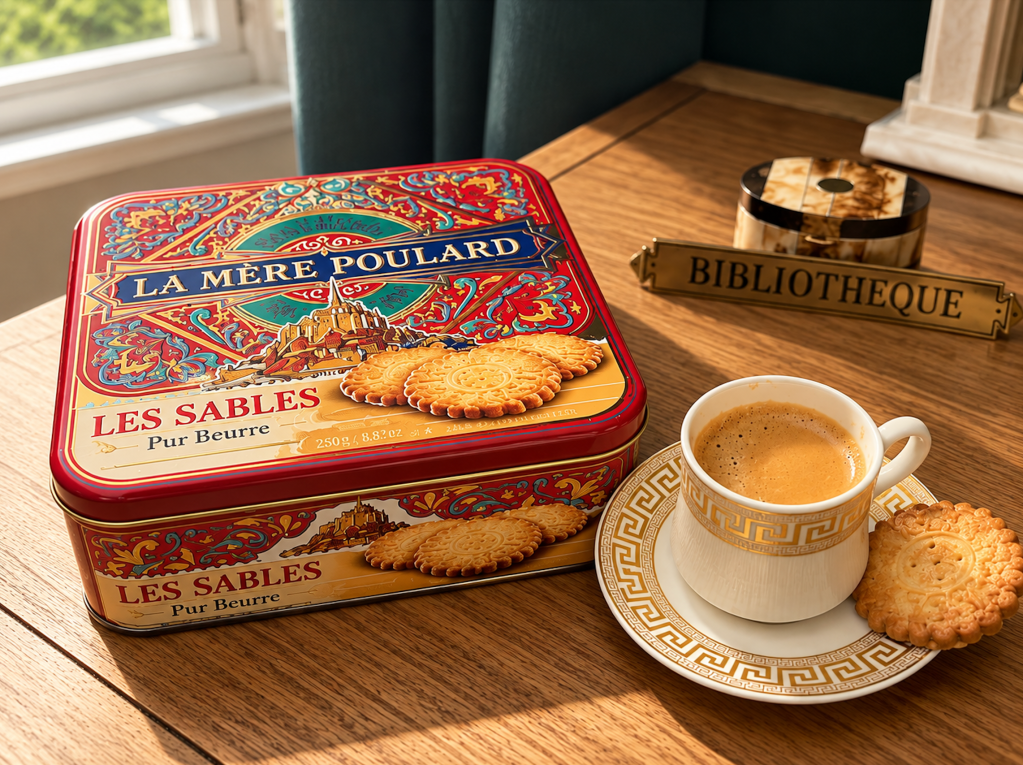
My version is very simple. I make coffee, preferably in my Bialetti lately, because I have rediscovered how much I enjoy the process of making coffee rather than simply obtaining coffee. I choose an actual cup, find something small to have with it, and sit down. Sometimes there is a book involved. Sometimes my daughter is nearby doing her own thing while I do mine. Sometimes there is nothing happening at all. The important part isn’t what I do during those twenty minutes. In fact, I think the whole point is that I don’t have to do anything with them.
There is something about giving ordinary things a little ceremony that I find increasingly appealing. Perhaps that explains my fascination with old objects, old cafés, libraries, traditional crafts and all those little remnants of ways people used to live. Coffee had a pot. Tea had a tray. Books had bookmarks. Letters had stationery. Objects were used repeatedly until they became associated with the rituals themselves. You reached for the same cup, opened the same book, used the same little tray, and eventually these ordinary things accumulated memories.
Of course, I am not romantic enough to pretend everything about the past was better. I am very fond of modern medicine, my dishwasher and Wi-Fi. I have no intention of giving any of them back. But progress doesn’t require us to discard every old habit simply because we have invented a faster alternative. Sometimes convenience removes friction, which is wonderful. Other times it removes the very few minutes that made an ordinary experience enjoyable.
Coffee is a perfect example. I can make coffee almost instantly, and on many mornings that is exactly what I need. But making it slowly on the stove creates a completely different experience. Filling the pot, waiting for it, hearing it begin to brew, choosing the cup and finally sitting down takes longer. That inefficiency is precisely what I like about it. The coffee isn’t necessarily better because it took longer. The few minutes around the coffee are.
I also don’t want this idea of slowing down to become another lifestyle we are expected to purchase. We have a remarkable talent for turning even simplicity into consumerism. Suddenly you need the correct linen robe, the perfect ceramic cup, an expensive candle, a beautifully styled reading chair and an entire new wardrobe in shades of oatmeal before you can apparently sit quietly for twenty minutes. That misses the point entirely.
Use the cup you already love. Read the book that has been sitting on your shelf for six months. Put an apple on a little plate. Open the window. Sit outside if the weather allows it. The ritual doesn’t come from owning the right objects. At the same time, I do believe beautiful things can make ordinary moments more enjoyable, particularly when those things mean something to us. There is a difference between buying objects simply to reproduce an aesthetic and surrounding ourselves with things that have gradually become part of our lives.
I love the latter. A cup brought home from a trip, an old book discovered somewhere unexpected, a handcrafted bookmark, a little tray that has been in the family for years, or some ridiculous object you carried through three airports because you knew exactly where you wanted to put it when you got home. These things aren’t necessary, and that is fine. Not everything we own needs to justify itself through necessity. Sometimes an object earns its place simply because it is beautiful, useful, well made, or reminds us of somewhere we have been.
This is also where I think our relationship with technology deserves some scrutiny. The problem isn’t that we have phones. I have no intention of throwing mine into a river. The problem is that our phones have become exceptionally talented at occupying every little space that used to belong to nothing. Waiting has disappeared. Boredom has disappeared. Looking out of a window for no particular reason has practically disappeared. We don’t necessarily need hours away from technology to notice the difference. Sometimes twenty minutes is enough.
That is really what I mean when I say I want to bring back the slow afternoon. I don’t want my entire life to become slow. There are seasons when I enjoy things moving quickly. I like ambition. I like building something. I like making plans and seeing them materialize. Slowing down should not require becoming less interested in where we are going. If anything, I think it helps us remember why we wanted to get there in the first place.
There should be room for both. A morning can be productive and an afternoon coffee can still take twenty minutes. You can work toward something ambitious and still read ten pages of a book without turning reading into another goal to track. You can walk because you enjoy the weather rather than because your watch says you haven’t completed your steps. You can sit beside your child without simultaneously answering an email. You can find a beautiful building, take the photograph, and then spend another minute actually looking at the building.
Maybe the goal isn’t really to slow down our lives at all. Maybe it is simply to stop allowing every available space to become occupied.
So I am bringing back my four o’clock ritual. Not religiously, not every day, and certainly not as another item on my schedule that I can somehow fail to accomplish. Some afternoons will be too busy. Some coffees will still be consumed while I am doing three other things. Life is life. But whenever the day allows it, I want to make the coffee, choose the cup, sit somewhere pleasant and disappear from productivity for a little while.
Twenty minutes when nothing needs to be optimized, documented or accomplished.
Then I can go back to everything else.
I think our days could use a little more punctuation.
The Strategic Woman
 The Strategic Woman
Leave a comment